Today David took a trip to Corinth. Heard of Corinthians? Yup that Corinth. The bus left early Monday morning and we drove through the Port of Piraeus (the port area for Athens) which is an experience in itself.

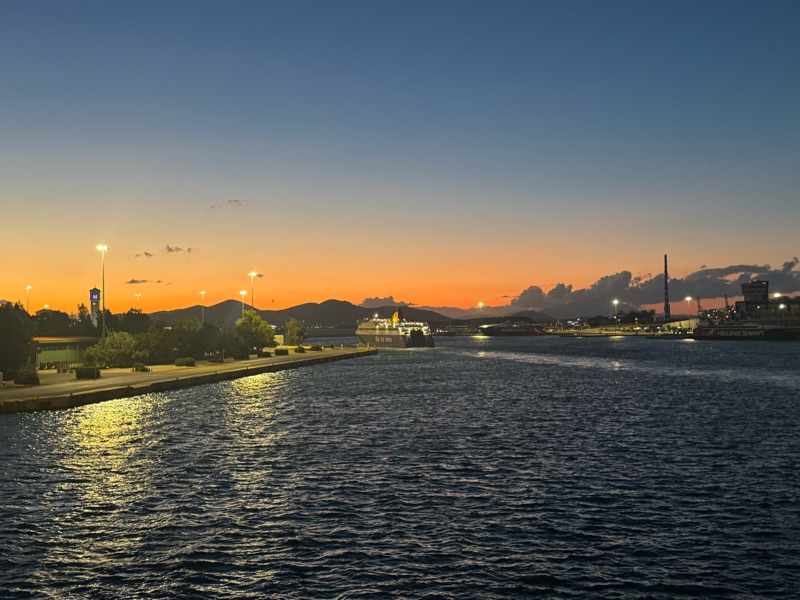
 Speaking of Pireas, when cities like Athens and Rome were first started ships were not really part of life and the cities were not built on the coasts. The boats used were rowed (6 oar early galleons) and travelled only along the shores. (Reference Greco Persian wars. 460bce)
Pireas however became more important as “navigation” came to the Mediterranean and was an early example a city planning: an example of the hipodean system ie streets we’re in a vertical and horizontal block system. The port is huge- the 4 or 5th largest in Europe.
It was an 1 1/2 hr trip to from the ship in Pireas (port of Athens) along the harbor ports along the shipyards and shipwrites, the warehouses and petroleum tanks and past major natural gas hub before getting into more rural areas.

It is said often here that your geography is your destiny and because of the hilly terrain and a lack of flat lands it becomes obvious how the whole system of city states built up. Land holdings were small. Even now a large portion of the population in the south will have enough land for a few olive trees. Our guide, with his mother and aunt has 32 olive trees which they harvest themselves and which provides enough oil for 18 months. Typically the city states would have a center less than 3 hours by Oxcart from the individual farms.
So there is this isthmus that is called, surprisingly the Isthmus of Corinth - a narrow strip of land that connects the Peloponnese peninsula to mainland Greece.
ATHENS IS A BIT NORTH AND Sparta a bit south. Certainly a defendable land defense. But as commerce widened there was the issue that to sail from one side is Greece to the other required a 15 day journey. What if they could cut a canal? For centuries this was a dream but rock like granite can be an issue. Nero started a canal in 63 ce. It was finished 1900 years later in 1863. https://www.britannica.com/place/Isthmus-of-Corinth
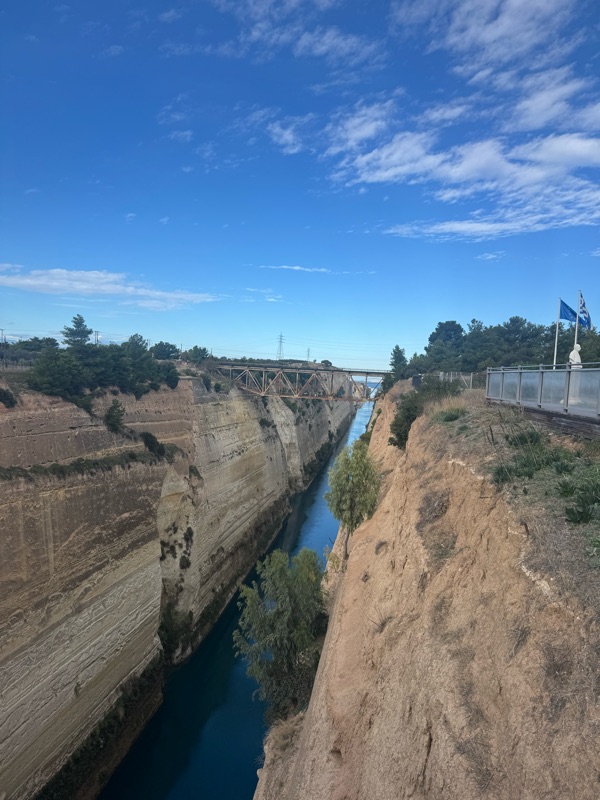
So now instead of 15 days it takes 15 minutes to go about 4 miles. Of course now the ships are much bigger but the canal does still get used some. 
And then what do I see….
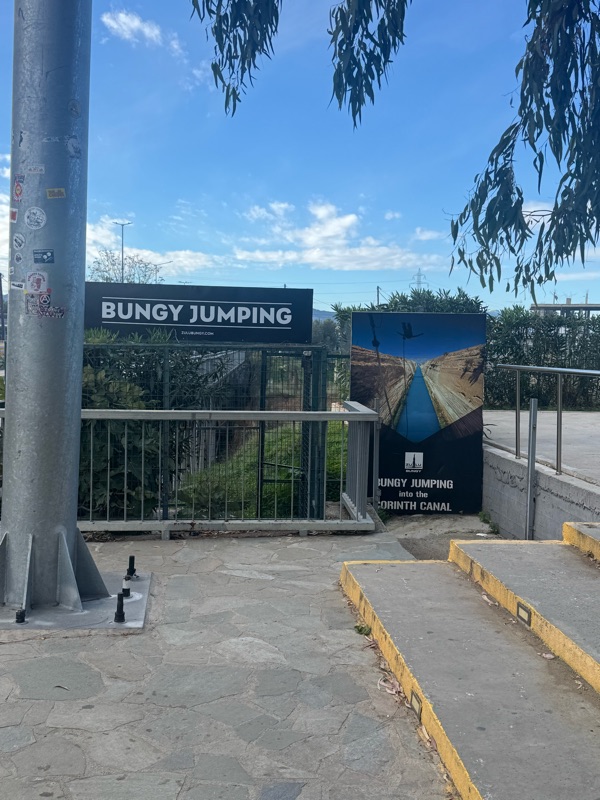

Hmm, what’y’think? Think I could do it in 15 minutes?
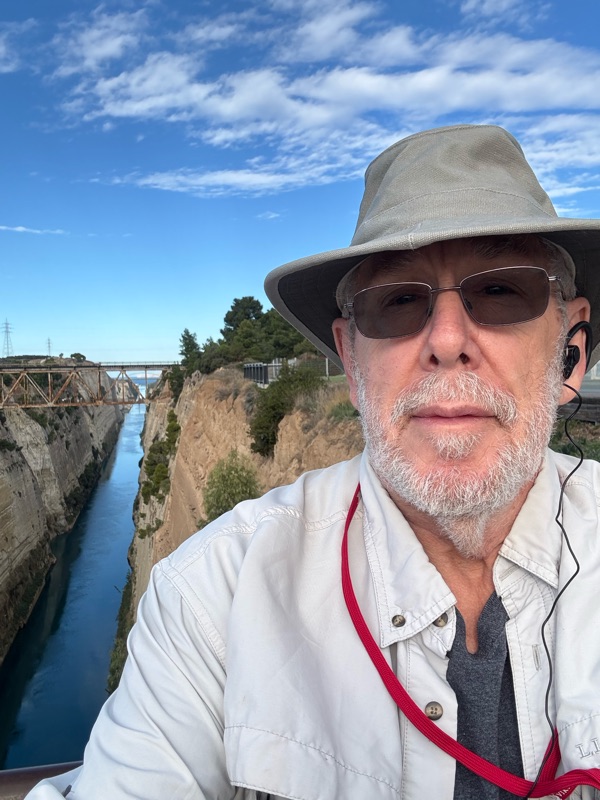 

Well we had to get back on the bus.
We’re off now to ancient Corinth and the Temple of Apollo

see the bleachers?

Temple of Apollo god of light, balance (karma) and music. Most worship took place outside the temple. Processions and animal sacrifice were the normal thing. Gods needed blood as life was seen as a give and take with the gods. Their concept of sin was a bit different. One was supposed to preserve what one might call Karma. If you didn’t it annoyed the gods and when karma was disrupted you needed a sacrifice (birth, death, stealing and other events)
Built 530 BCE built of soapstone in Doric style these columns are still standing.


in the above shop the Forum (agora) is in the foreground. On the far side of the forum at about 11:00 o’clock you’ll see a raised platform with people standing on it. This is where Paul did his preaching to the Corinthians.
And that platform was called a Veema (rhymes with Bema. A coincidence? I think not ) in later days a chapel was built over the bema and you see some relics of the Middle Ages added as well.
Paul stayed here 18 months peaching and working as a tent maker.
We wondered about all the fire extinguishers under the pine trees. Apparently these trees are a real nightmare as if they catch fire the pine cones flare up and catch everything around on fire as well.


Some of the first recorded synagogues (from the time of the Jewish Temple) were found in Greece. In Delos from 60 bce and these relics from a synagogue in Corinth from about 50 bce. Note the candelabra, the Lulav and the etrog.
And of course there were the self aggrandizing statues of the big wigs.

One of my favorite stories of the day was that when Nero was touring here he was in a chariot race. Apparently he fell out of the chariot but was still awarded the prize for winning. The tour guide goes: much like what’s happening on the other side of the Atlantic now.
I leave you with the statue of what is presumed to be Dianna. Note the high boots and belts - suggestion of a hunter
Meanwhile, my own hunter was out on her own quest. Melanie went on a food tour instead of going to Corinth and was very happy. 😃
The end.

No comments:
Post a Comment