
So when you have this sort of landscape with Fyords and sudden 2000 foot elevations, tunnels become vital for a modern transportation. Early in the 20th century(1923-42) train tunnels were built by hand:
All the tunnels, with the exception of Nåli and Vatnahalsen, were drilled by hand. The drills were quickly worn down where the bedrock was hard. At Melhus the bedrock was so hard that they could not drill more than two-three centimetres before the drills had to be sharpened. The work teams could consist of six men; two men drilled, two men loaded, and two men transported the excavated masses. The rate of progress was usually two metres a week.
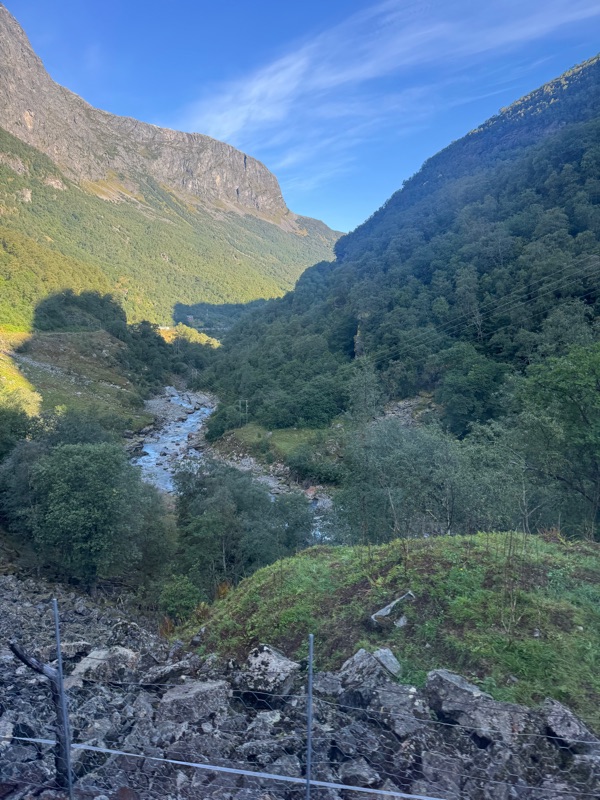
Now later in the 20th century (1995-2000) tunnel drilling was much faster and we did drive through the world’s longest road tunnel.
Lærdalstunnelen – World’s Longest Road Tunnel
It’s so long that there are pull offs, complete with light scenes (northern lights, sunrise, to rest and decompress. Lots of problems with people getting “hypnotized” and falling asleep while driving
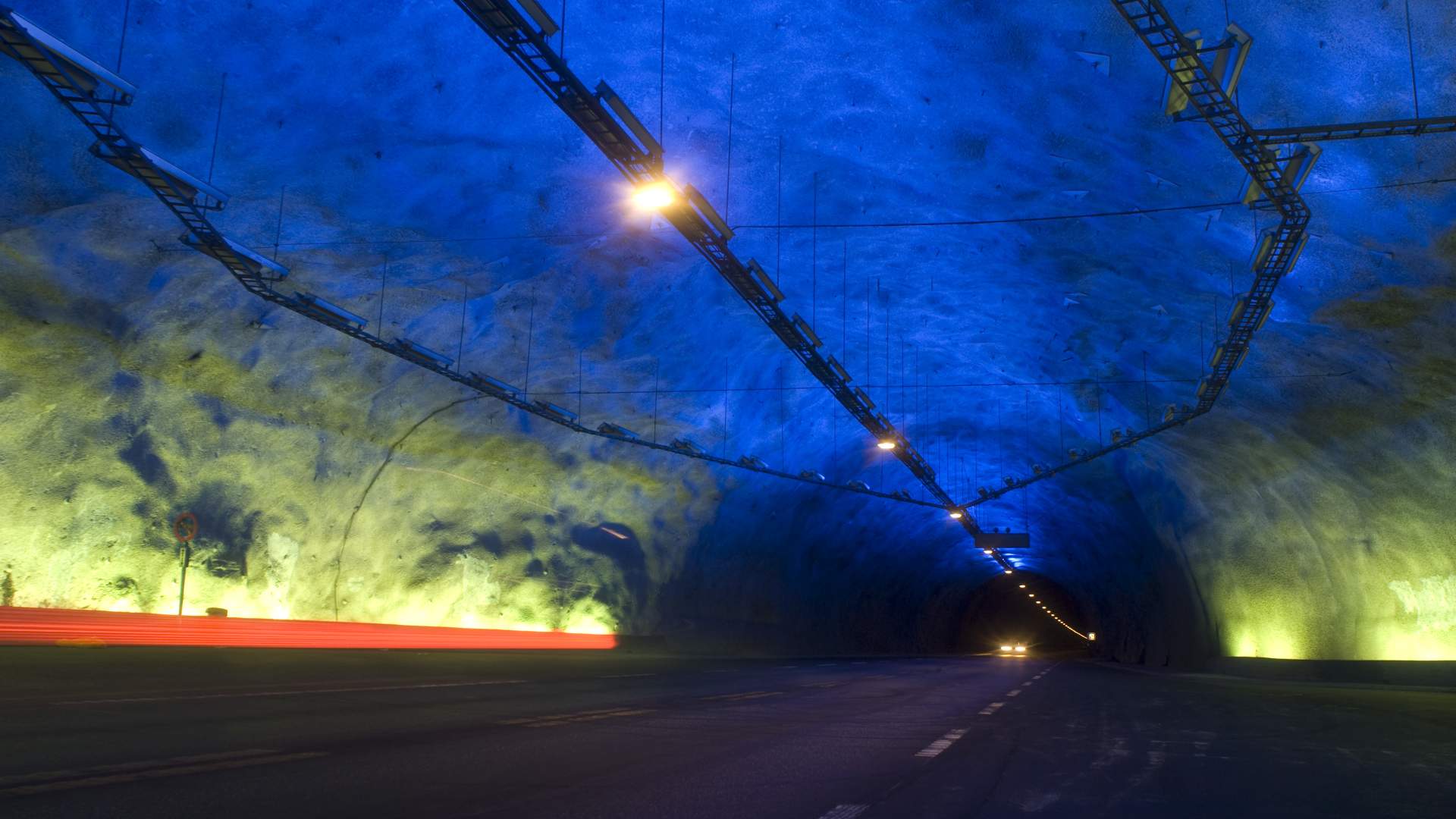
Some tunnels are complete with round abouts to direct to other tunnels without coming out. I can’t imagine driving and come across the roundabout in a tunnel
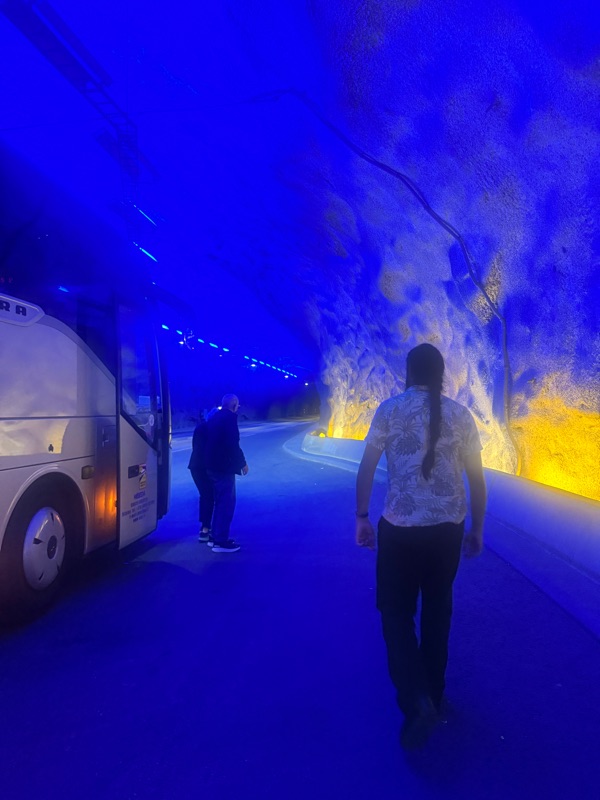
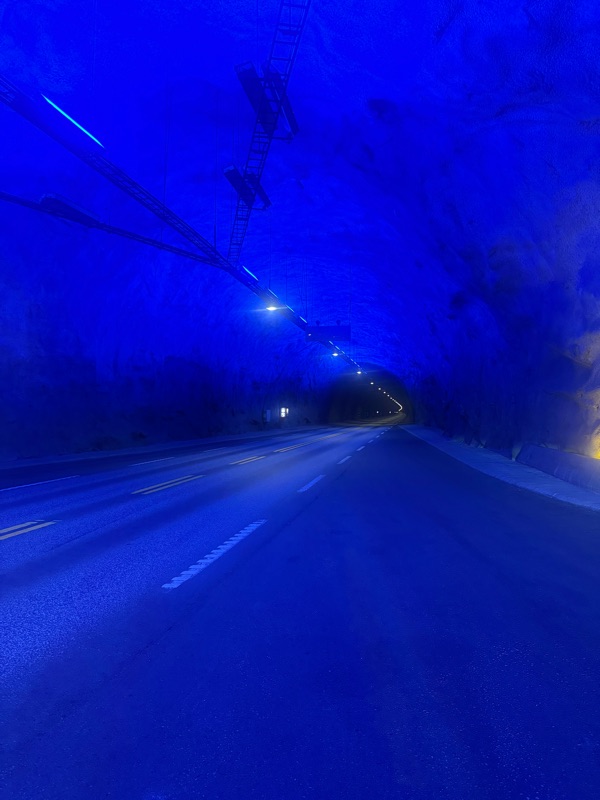
Sometimes the roundabout puts you on a bridge only to enter another tunnel on the other side. 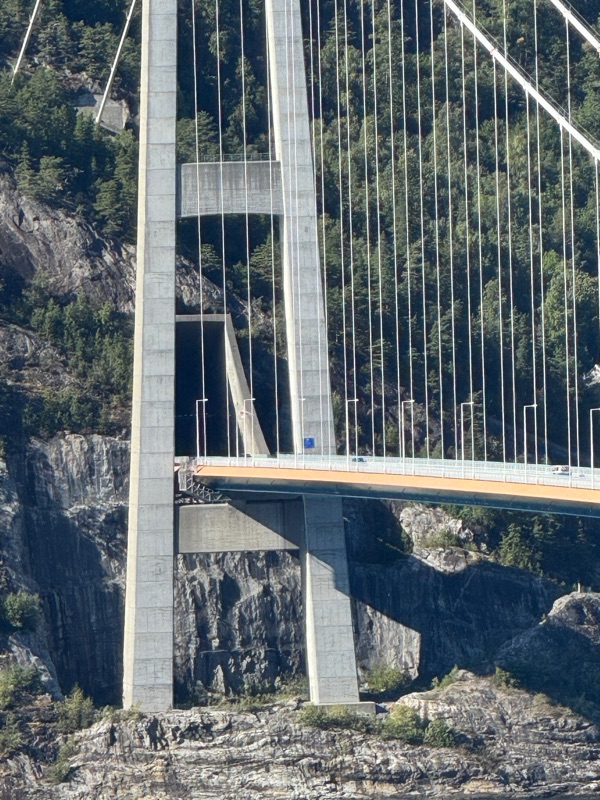
We’ll be back in Oslo soon and will try to catch up with all we’ve left out. 🙀

No comments:
Post a Comment