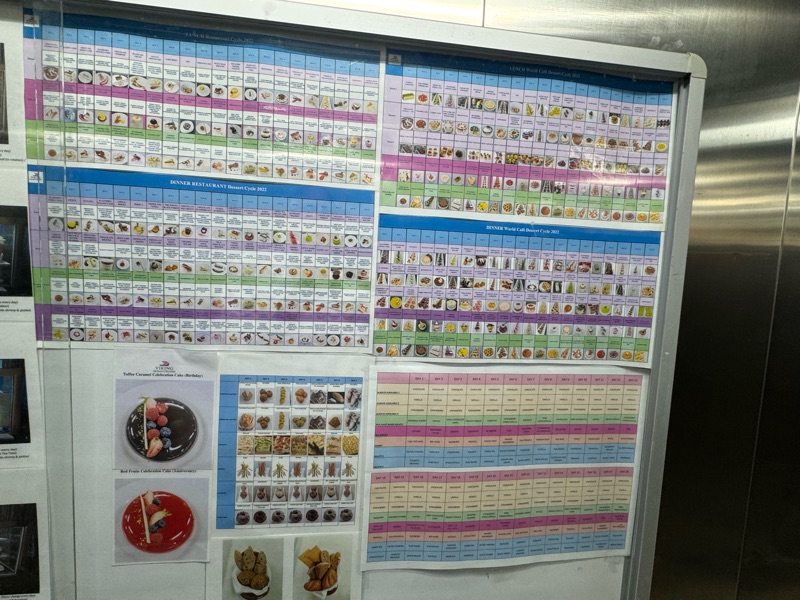
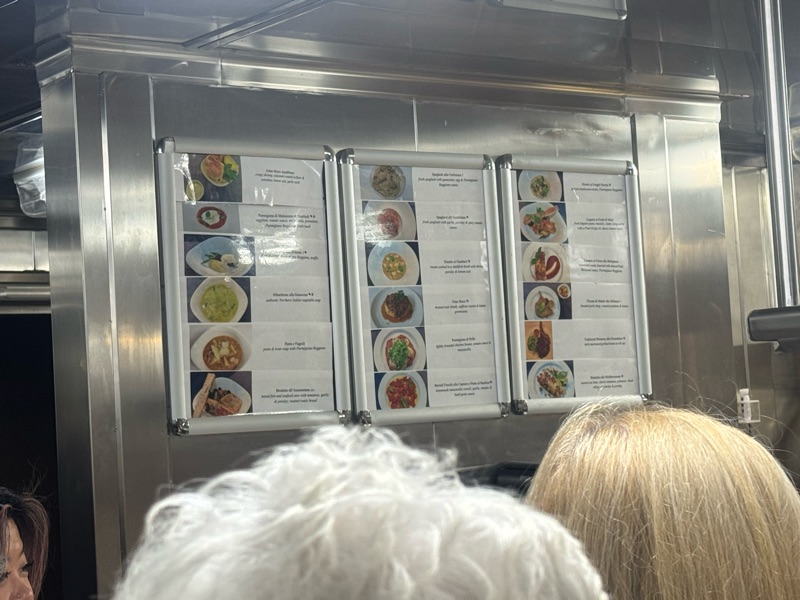
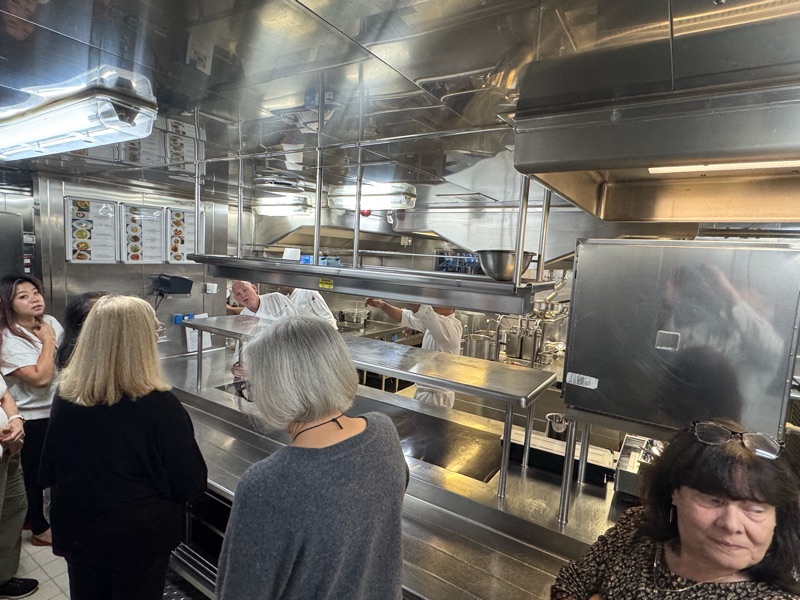
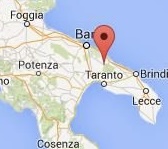
Today we landing in Bari which is the capitol of Puglia which is also known as Apulia and even better known as the “heel of “Italy”
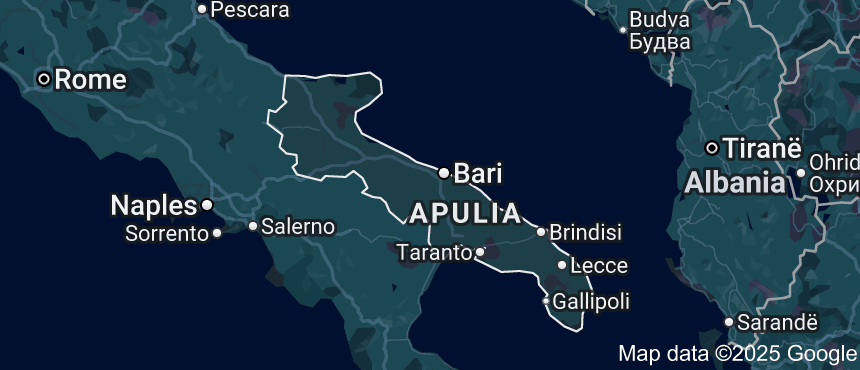 Bari became famous in the world of Catholics as the host for the body of St Nicholas (yes that St Nick) who, while Turkish and having never been to Italy had been named their Patron Saint.
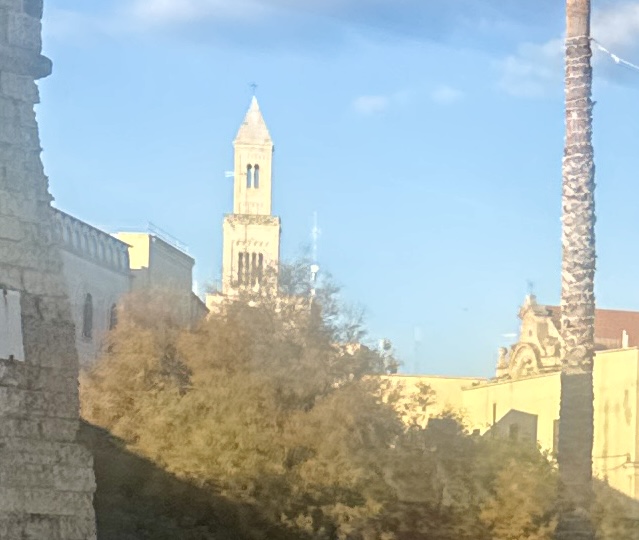 Feel free to check my facts, but apparently back in 1087, while under Norman Rule, 62 sailors were sent to Turkey to steal the body- ostensibly to protect it from the Seljuk Turks advance in that region.
In any case, it literally put Bari on the map and soon the town began to prosper as pilgrims flocked to the new cathedral.
Today, however we’re interested in Alberobello. On our drive there we so verdant agricultural land with Olives, grapes, wheat, almonds, cabbage, cherries oh yeah and more olives.
. 
Puglia is second only to Tuscany in wine production.


Flat land stands in stark contrast to Croatia and the coast of the eastern Adriatic.

And you see dry laid stone walls. EVERYWHERE! Walls made from the land thats farmed. Dry stone construction means rain can move through and gaps in walls create microbioms. Dry stone walls received Unesco recognition.

And between many of these walls you find olive trees. They are everywhere, even in the coat of arms. There are more than 60 million trees. It is said that some of them date back 3000 years.
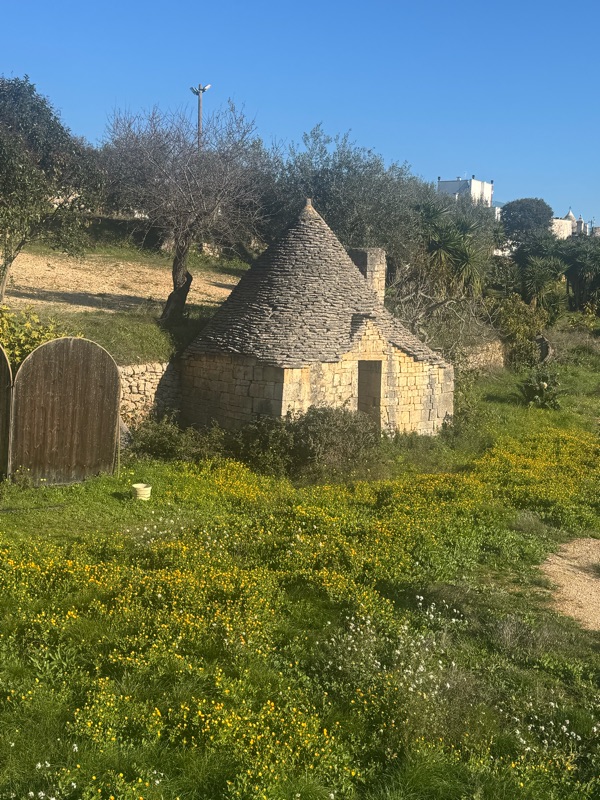 This building dates to ~1600. Back in the 15th century the government asked for a tax on each house built. So order to avoid this they started building house without mortar. And the roofs were laid with stone held in place by one “keystone” at the top. So if inspector came to own you just pulled out the keystone and the roof would collapse. This continued till 1720 or so. Now they use mortar so tourists can safely enter.


Is a very dry and region, and so system were very very important. Try to collect rainwater distance of chain by digging, were used to build walls and wars were built with large block of line. The most important part is the roof. The roof is made by two different an inner skin inside, which is made by the same technique of the wall with large blocks of limestone and now there’s skin where the flags are slightly tilted outwardly and the structure is waterproof water.

You can see above how the water was directed for easier collection. The guide is pointing to the runoff stone.
Apulia actually means “no water” so its management was of great concern.
You may notice that there are some different shaped keystones. The design indicated the builder.

With the narrow winding streets and the small buildings everything is close and the smells of food in the modern town were everywhere. One can only guess what it might have been like when there were other “more earthy” scents mixed in.
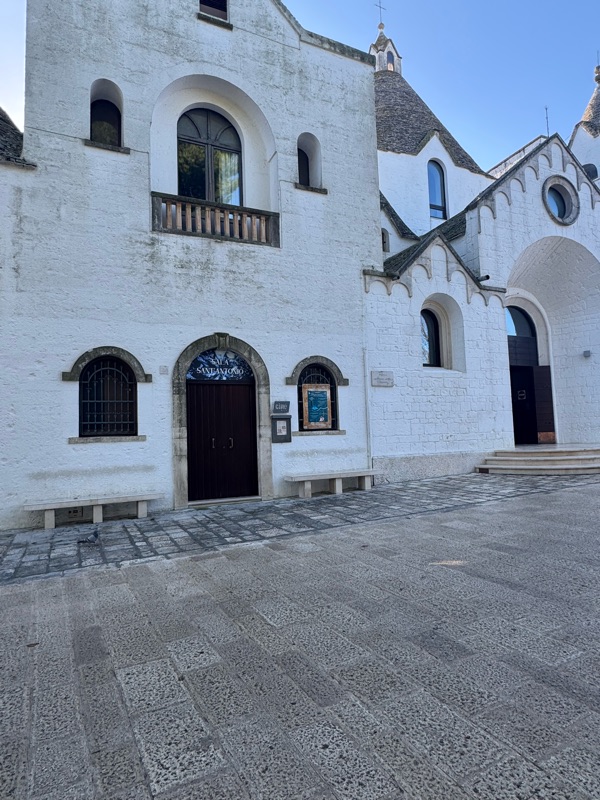
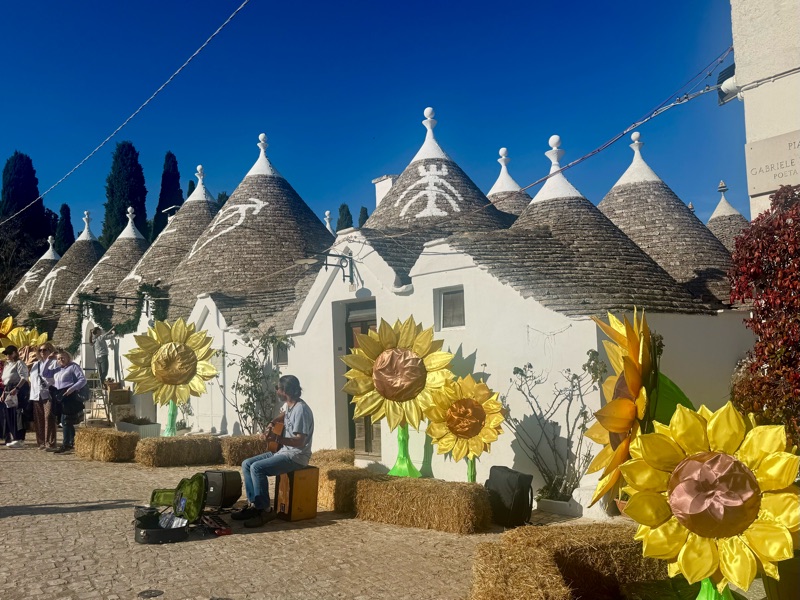
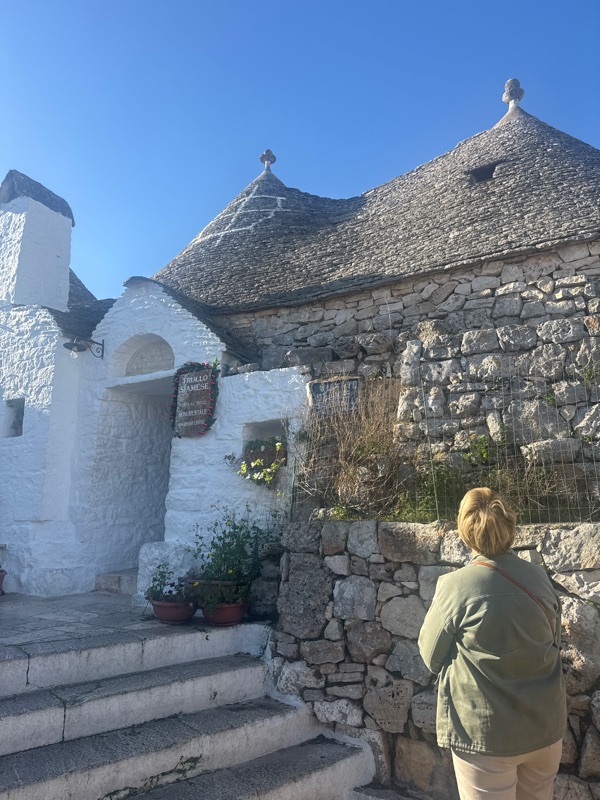
Two roofs connected for two brothers in love with some woman. I’m not quite sure how that story worked out.
It is sometimes also called the “white City”. Apparently at the time of the plague it became to commonplace to whitewash the buildings. Apparently the quicklime in the mixture had certain antibacterial properties - well that certainly wasn’t part of their awareness - but it became a common practice.
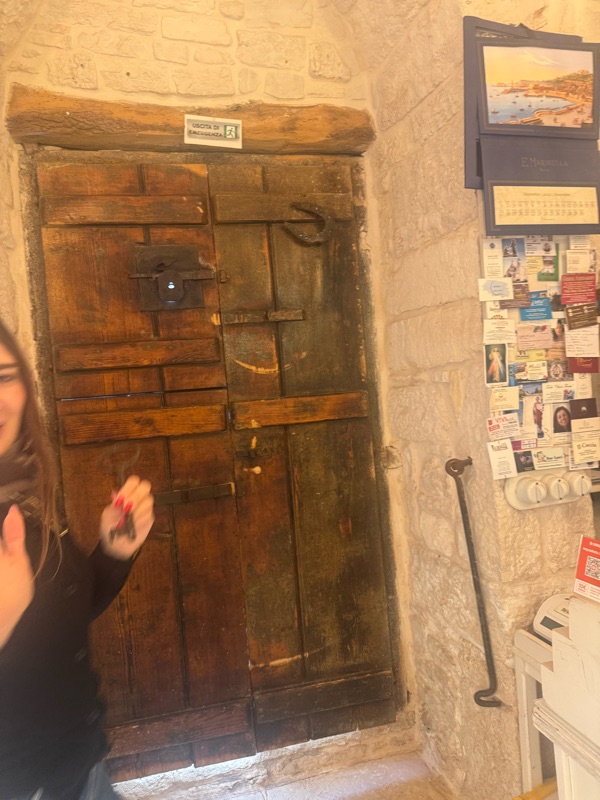
The houses themselves were small, rarely with room for more than a family of 7. There might be a loft for the parents and then in the one big room a corner of the kids, one corner for the kitchen. There was one door and often the only window as in that door - you can see it in the upper left quadrant of the door above.
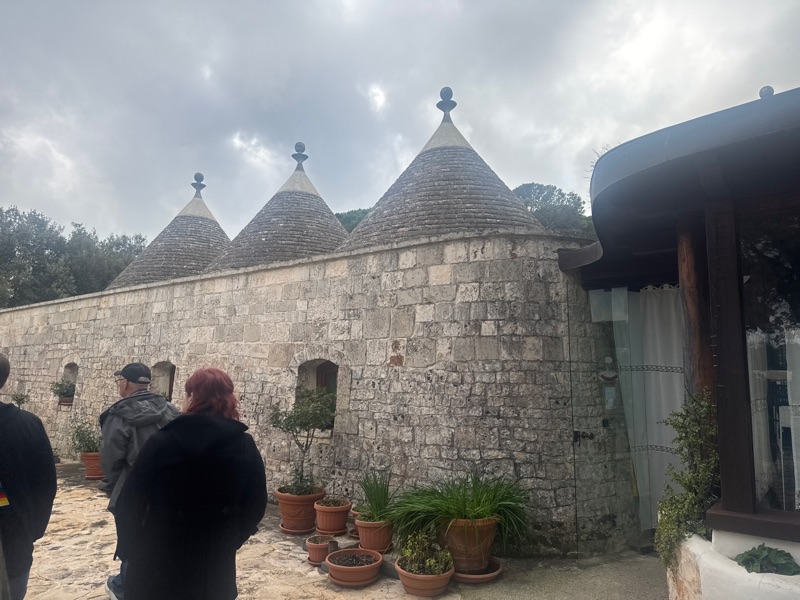
Later we drove to a farmhouse where we were treated to an assortment of homegrown foods
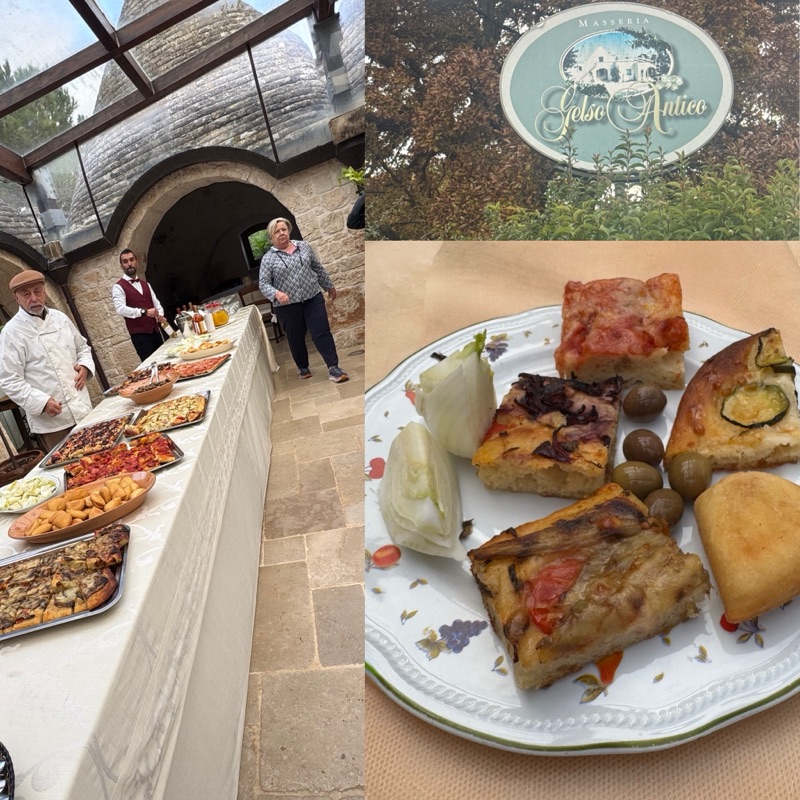
There were 5 types of focaccia featuring local vegetable, olives of course and a couple big chunks of fennel. Plus of course some local wine.
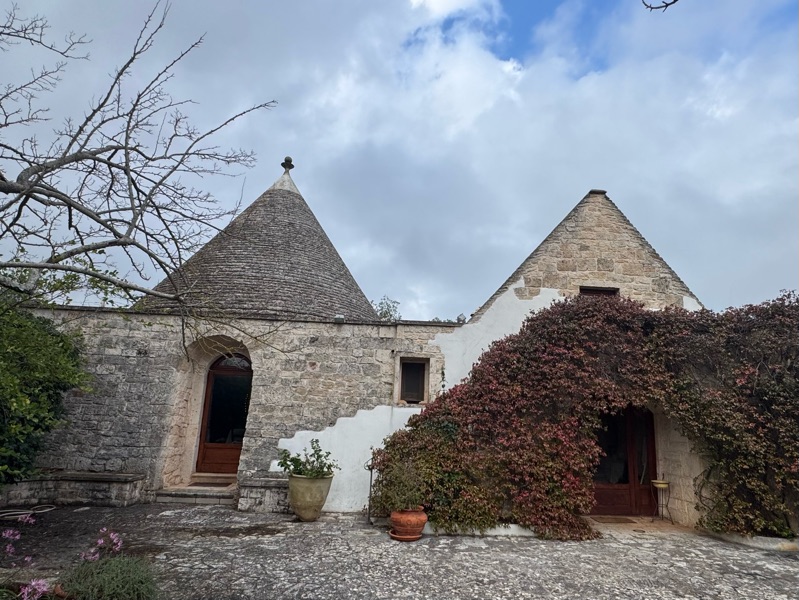
And I never got to tell you about the railroad cherries and way grandma told her granddaughter about adultery…..

I didn’t do the tour in Bari or the galley tour. I’ve been thinking about my incredible friend Elliot. He’s been a role model for many many years and we will miss him. But I won’t miss the lousy Chinese food you always made me eat Elliot!.


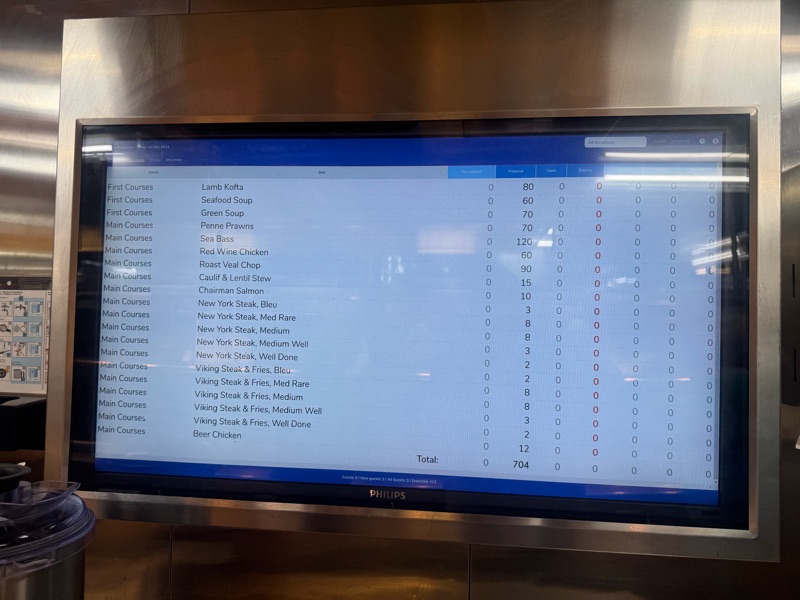
 And the breads are all done by the guy in the background.